
Embodied Resilience Self-Mastery Program
Join our 3-month Experiential Online Journey
to Reset Your Nervous System & Build Resilience
For Individual Self-Healers
Nervous System Reset
Transform Your Trauma & Stories into Healing
Proven Self-Healing Strategies for Life-Changing Outcomes
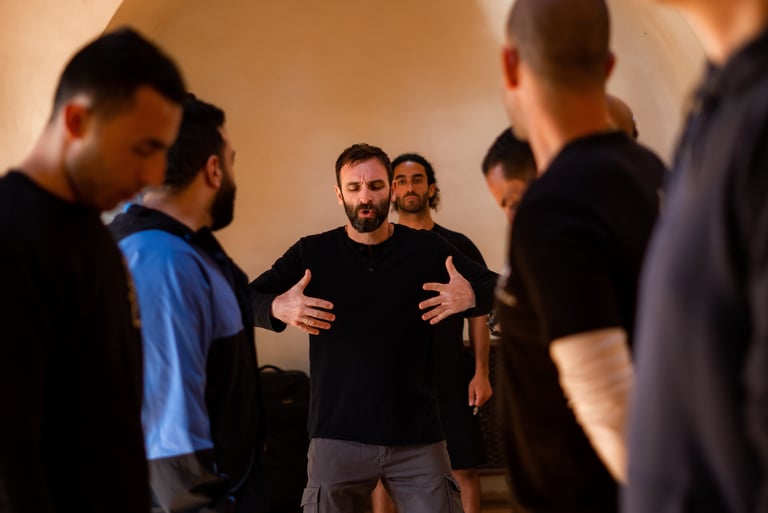
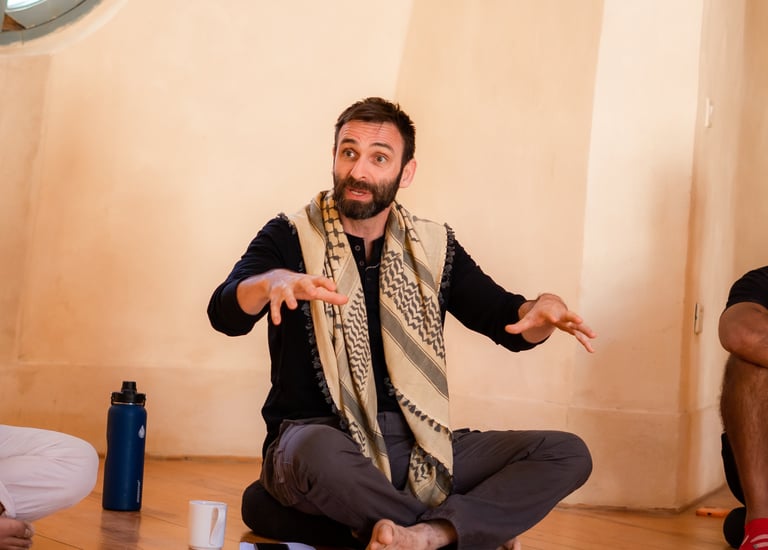
3-5 Live Weekly Sessions with Pierre-Etienne and The ERMP Community.
A Comprehensive Guide to Reset Your Nervous System
Tools In Somatic Healing for Deep, Lifelong Impact
Step-by-step Guidance: To Safely & Skillfully Navigate Your Own Trauma Healing
➡️ "I want to be healthier."
➡️ "I want to deepen & improve my relationship with myself and others."
➡️ "I want to better manage stress & life challenges"
➡️ "I want action steps on HOW to heal!
Access Exclusive Intro Video
No Strings Attached!!
Do ANY of the following resonate with you?
What Are You Guaranteed?
Real Growth Stories
Emilce's Experience
Blaise's Experience


“You’re given all the things that work towards creating a healthier person.”
"I feel more connected to my body and humanity. This program was totally magical."
Kale's Experience
Leyth's Experience


“Wonderful experience for me. I learned to connect with myself in a way I was looking for for a long time.”
"Thank you all for this gift. I will take it with me always. It saved my spirit and strengthens my healing resolve. I am most grateful to you all for your wisdom.”
Beth's Experience
Shideh's Experience


"Pierre's insight and guidance is an inspiration. His gentle nature reminds us to slow down, be grateful for the healing connection. Grateful for the strength and energy of the group. It is a journey and the practice is such an important part of it."
“My experience could not have been more positive. Pierre is skilled, sensitive and caring. Anyone who has been through trauma can certainly benefit from this program.
I certainly did.”
Program Outline
This section establishes the container for the entire journey. It is designed to create safety, clarity, and alignment so that participants can fully engage with the work ahead.
Participants are guided through:
The structure of the program and how to navigate the learning environment
The rhythm of the training, including live sessions, self-paced learning, and integration practices
Core agreements that support safety, confidentiality, and respectful engagement
Principles of healthy sharing within a trauma-informed space
Cultural sensitivity and awareness in group settings
Expectations around personal responsibility and self-directed learning
Communication guidelines, including how to ask questions effectively and how to seek support
Orientation to community spaces and how to engage with peers
This module sets the tone for the work: grounded, intentional, and relational.
👉 This section includes guided practices to support grounding, orientation, and initial self-connection.
Foundations & Orientation
No Strings Attached!

This module builds a strong conceptual and experiential understanding of stress and trauma, helping participants make sense of their own experiences and those of others.
Participants explore:
The definition of stress and trauma from both psychological and physiological perspectives
The difference between acute stress, chronic stress, and trauma
Various types of trauma, including developmental, relational, and shock trauma
The role of early life experiences and adverse childhood experiences in shaping the nervous system
The mechanisms through which trauma impacts the body, brain, and behavior
How trauma is stored and expressed somatically
Common trauma responses and adaptations
The relationship between trauma and identity, perception, and meaning-making
Pathways toward healing and post-traumatic growth
The emphasis is on bridging intellectual understanding with embodied awareness.
👉 This module includes guided practices to help participants connect concepts to lived experience and begin building internal resources.
CORE MODULE 1 — Understanding Stress & Trauma
CORE MODULE 2 — The Nervous System & Polyvagal Theory
This module provides a deep dive into the nervous system as the foundation for regulation, connection, and resilience.
Participants are introduced to:
The architecture and function of the autonomic nervous system
The core principles of Polyvagal Theory
The social engagement system and its role in connection and safety
The fight and flight responses and how they manifest in the body
The freeze, flop, and fawn responses and their adaptive roles
The concept of neuroception and how the body detects safety or threat
The fluidity of nervous system states and how individuals move between them
The identification of cues that signal regulation or dysregulation
The relationship between nervous system states, emotions, thoughts, and behaviors
Practical ways to track internal states moment to moment
Participants begin to develop a nuanced map of their internal landscape.
👉 This module includes guided practices to help participants track, recognize, and gently influence their nervous system states.
This module focuses on the body’s innate capacity to release stress and restore balance through physiological processes.
Participants explore:
The biological basis of therapeutic tremors as a natural discharge mechanism
How the body completes stress cycles when given the right conditions
The benefits of tremoring for releasing accumulated tension and trauma
The role of safety, pacing, and titration in somatic release work
When tremoring is appropriate and when it is not (contraindications)
How to recognize signs of overwhelm or dysregulation during release
The importance of integration following somatic activation
The difference between voluntary and involuntary movement in healing processes
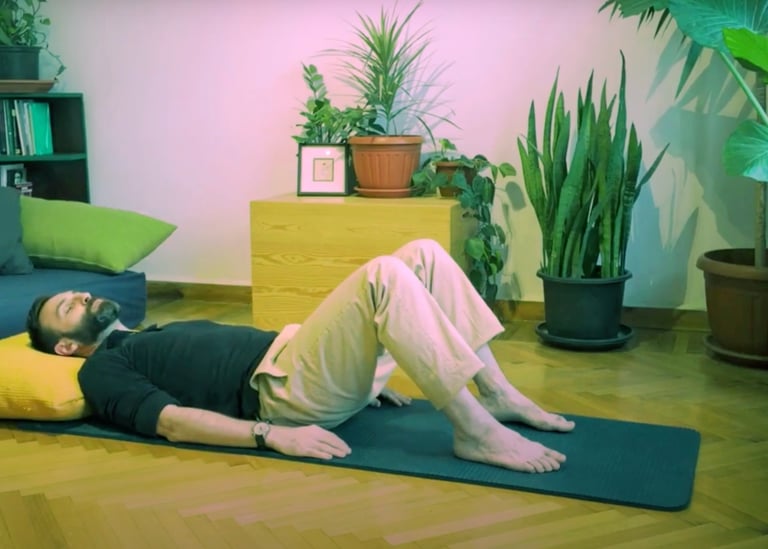
Participants are guided progressively through movement-based sequences that prepare the body for tremoring, followed by methods to safely induce and regulate the experience in different positions.
👉 This module includes guided practices that support gradual activation, release, and integration through the body.
CORE MODULE 3 — Somatic Release & Therapeutic Tremoring
CORE MODULE 4 — The Magnificent Breath
This breathwork module focuses on the profound physiological and psychological impact of breathing, teaching participants how to harness the breath as a tool for regulation, healing, and altered states of consciousness.
Participants explore:
The mechanics of breathing: Understanding the critical differences between mouth breathing and nasal breathing for health.
Diaphragmatic foundations: Learning to engage the primary breathing muscle to maximize oxygen exchange and calm the nervous system.
Nasal health: Practical techniques to decongest the nasal passages and optimize respiratory efficiency.
The power of slow breathing: How reducing breath rate influences the autonomic nervous system and promotes longevity.
Structured breath patterns: Practicing specific ratios like Coherent Breathing, Box Breathing, and the 4-7-8 technique for targeted regulation.
Breath retention: Exploring the therapeutic benefits of conscious breath holds and "less is more" approaches to CO2 tolerance.
Advanced & Energetic practices: An introduction to specialized techniques such as Tummo and Holotropic/Conscious Connected Breathing for deeper somatic exploration.
Integration and Safety: Identifying how to safely navigate different breathwork intensities and integrate the resulting shifts in state.
Participants are guided progressively from basic observational awareness and physical decongestion to complex breathing rhythms and high-activation practices designed to shift internal chemistry and energetic flow.
👉 This module includes guided practices that support gradual activation, release, and integration through the breath.
This final module focuses on embodiment, repetition, and the integration of all tools and experiences into daily life and professional practice.
Participants are supported in:
Integrating all previously learned concepts and tools into a coherent personal practice
Developing consistency and discipline in applying the work
Strengthening their ability to self-regulate across a variety of situations
Deepening presence, attunement, and internal awareness
Learning how to adapt practices to different contexts and needs
Reflecting on personal growth, patterns, and transformation throughout the program
Identifying next steps in their personal and professional journey
Participants also gain access to a wide range of recorded sessions, additional materials, and extended resources to support continued learning.
👉 This module includes guided practices that support integration, embodiment, and long-term mastery.
CORE MODULE 5 — Integration, Practice & Self-Mastery
Access Exclusive Intro Video
No Strings Attached!!